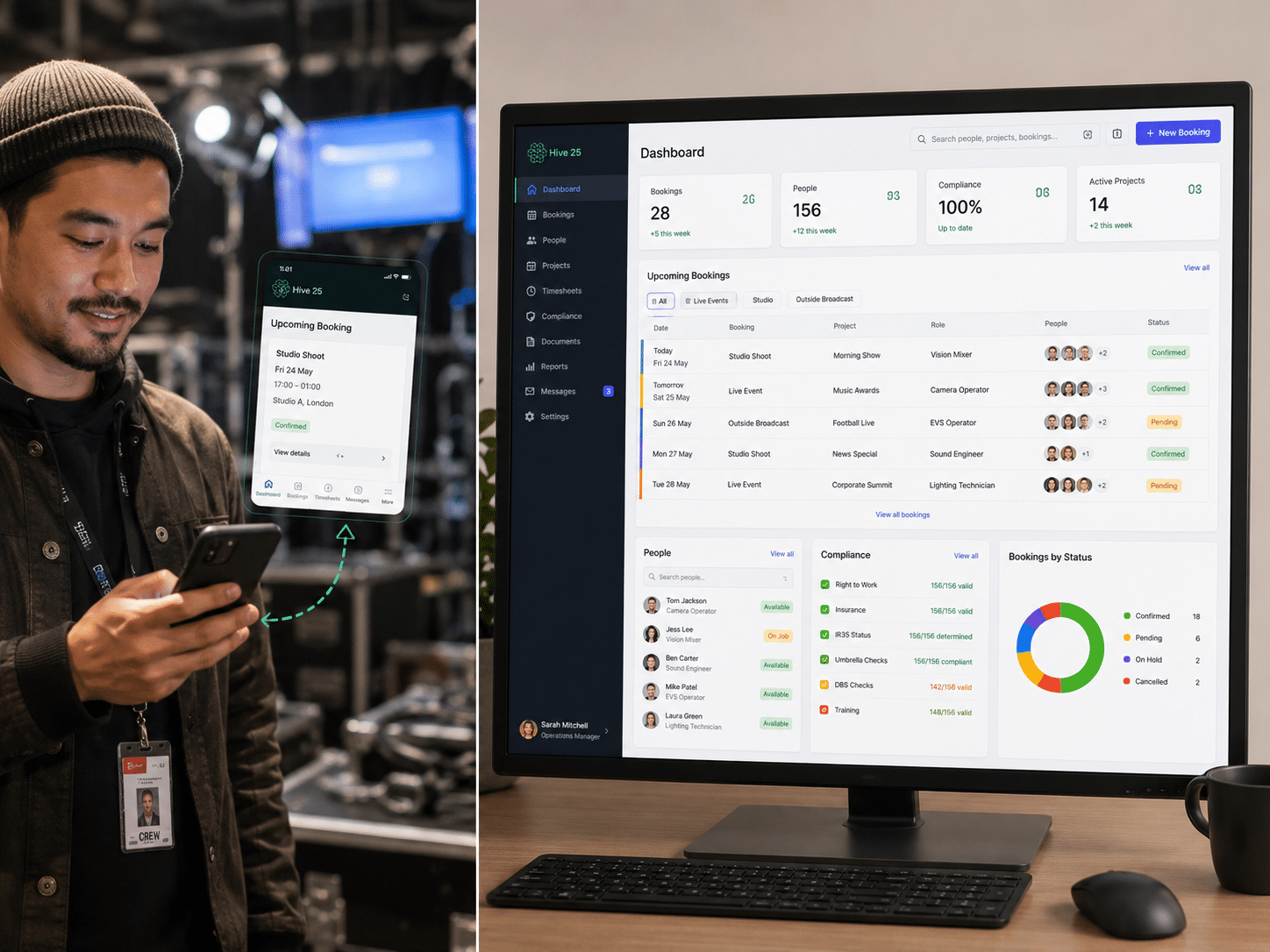

The WhatsApp era
Walk into almost any production office and the booking process looks remarkably familiar. A job comes in. Someone opens WhatsApp, or their phone, or both, and starts working down a mental list of who they’d want and who might be free. Calls get made. Texts get sent. A group chat spins up. Somewhere there’s a spreadsheet, colour-coded, jealously guarded, and fully legible to exactly one person.
Then there’s the availability chase. You ring down the list and hope. The first three are already booked, the fourth doesn’t pick up, and by the time you’ve found someone it’s two days later and you’ve sent forty messages to fill one slot. Multiply that across a week of bookings and a chunk of your operations team’s time has quietly disappeared into the phone.
Why it worked – for a while
None of this is stupid. For years it was the right way to do it. When rosters were smaller, jobs were fewer, and compliance was simpler, one or two experienced bookers could genuinely hold the whole picture in their heads. They knew who was good, who was free, who you’d never put on the same job twice. It was fast, informal and human, and it worked precisely because the volume was manageable.
The problem is that nothing about live production has stayed at that volume.